Ruihan Zhao 赵瑞涵

Lecturer, Sino-German College of Applied Sciences (CDHAW), Tongji University

Ruihan Zhao

Since January 2026, I have been a Lecturer at the Sino-German College of Applied Sciences (CDHAW), Tongji University. I received my Ph.D. from Tongji University in 2025 and my master's degree from Tongji's Sino-German School for Postgraduate Studies in 2021, both advised by Pengzhong Li. In 2024, I was a visiting Ph.D. student (joint doctoral training) at the Professorship of Autonomous Vehicle Systems (AVS), Technical University of Munich, hosted by Prof. Johannes Betz.

I work on human–robot collaborative (HRC) assembly, focusing on adaptive task allocation and planning that jointly accounts for safety, efficiency, and human factors. My methods combine multi-objective evolutionary optimization, reinforcement self-learning, and fuzzy clustering to plan resources and tasks in shared human–robot assembly systems. I also work on differential evolution algorithm design and benchmark-driven numerical optimization, with applications such as wind farm layout optimization.

I was part of the RDEx team that won first place in all four numerical optimization tracks of the IEEE CEC 2025 competitions, and of the RDE team that received a silver award at IEEE WCCI 2024. Recent first-author papers appear in Applied Soft Computing, Advanced Engineering Informatics, and Robotics and Computer-Integrated Manufacturing; the full record is on the publications page.

ORCID 0009-0009-8208-0377 ruihan_zhao@tongji.edu.cn

news

Aug 13, 2026Co-authored paper on three-objective wind farm layout optimization published in the IEEE ICCNSE 2026 proceedings.
May 14, 2026First-author paper on adaptive product family formation for shared human–robot collaborative assembly published in Applied Soft Computing.
Apr 04, 2026Four technical reports on the RDEx differential evolution series (SOP, CSOP, MOP, CMOP) released on arXiv.
Sep 04, 2025First-author paper on human–robot collaborative resource and task planning published in the IEEE RCAR 2025 proceedings.
Jun 17, 2025First-author paper on a human-centric assembly planning framework published in Advanced Engineering Informatics.

selected publications

* Corresponding author. Selected first-authored work and JCR Q1 journal papers.

Adaptive product family formation: A medoid-based fuzzy clustering method for mixed product assembly in the shared human–robot collaborative system

R. Zhao, S. Tao, Y. Zhou, X. Zhang, P. Li*

Applied Soft Computing, vol. 200, Art. no. 115419, 2026.

Paper

Citations 02024 JCR Q12024 IF 6.62024 CiteScore 14.5
IEEE RCAR

Human-robot Collaborative Resource and Task Planning for Assembly Systems with Self-learning Multi-objective Evolutionary Optimizer

R. Zhao, S. Tao, P. Li

IEEE International Conference on Real-time Computing and Robotics (RCAR 2025), pp. 1272–1277, 2025.

Paper

Citations 0

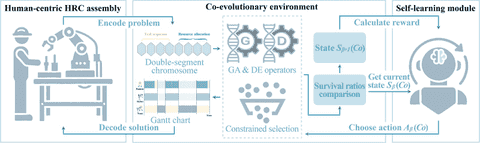
AEIFig. 1 of the paper: the human-centric HRC assembly problem is encoded for a co-evolutionary optimizer (double-segment chromosome, GA and DE operators, constrained selection) that is steered by a reinforcement self-learning module
Fig. 1 of the paper

Human-centric assembly planning framework for human–robot collaborative systems with efficient reinforcement self-learning multi-objective evolutionary optimizer

R. Zhao, S. Tao, P. Li*

Advanced Engineering Informatics, vol. 67, Art. no. 103508, 2025.

Paper

Citations 132025 JCR Q1 (Top 10%)2025 IF 9.92025 CiteScore 15.8

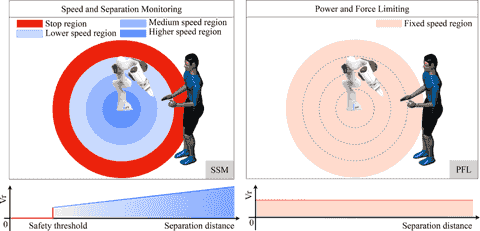
RCIMFig. 1 of the paper: speed and separation monitoring (SSM) versus power and force limiting (PFL), showing the robot speed regions around a human co-worker
Fig. 1 of the paper

Safety-efficiency integrated assembly: The next-stage adaptive task allocation and planning framework for human–robot collaboration

R. Zhao, S. Tao, P. Li*

Robotics and Computer-Integrated Manufacturing, vol. 94, Art. no. 102942, 2025.

Paper

Citations 212025 JCR Q12025 IF 11.42025 CiteScore 27.6

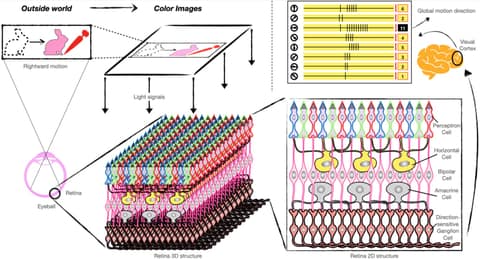
KBSFig. 1 of the paper: light from color images passes through the layered retina (photoreceptor, horizontal, bipolar, amacrine and direction-selective ganglion cells) to the visual cortex, which reports the global motion direction
Fig. 1 of the paper

A novel artificial visual system for motion direction detection in color images

S. Tao, Z. Zhang, R. Zhao, Z. Tang, Y. Todo*

Knowledge-Based Systems, vol. 295, Art. no. 111816, 2024.

Paper

Citations 52024 JCR Q12024 IF 7.62024 CiteScore 15.8

Lecturer at Tongji University (Sino-German College of Applied Sciences) working on human–robot collaborative assembly planning and evolutionary optimization. Not to be confused with other researchers named Ruihan Zhao (e.g., in robot learning at UT Austin or UC Berkeley, or in medical imaging).